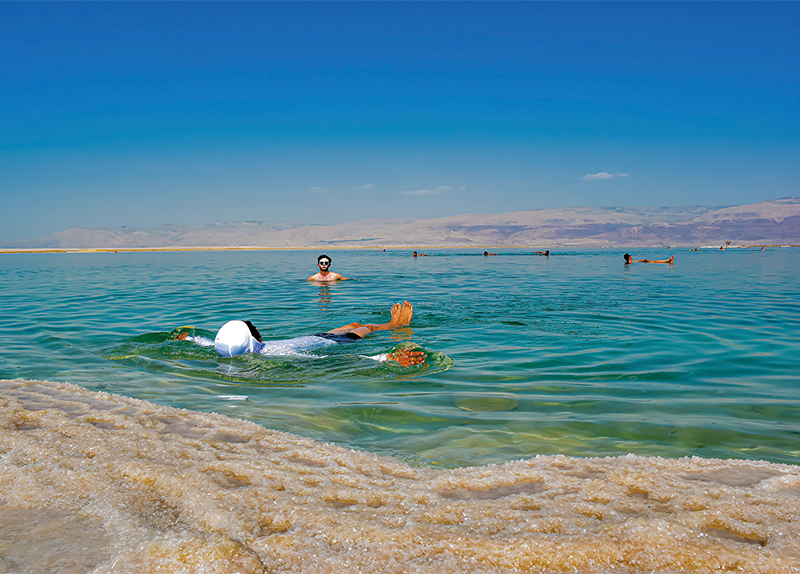
"The Dead Sea is a lake unlike any other, being both the lowest place on Earth at 439.78 meters below sea level and one of the world’s saltiest bodies of water. Its extreme salinity, nearly 10 times that of the ocean, also has the interesting effect of making sinking virtually impossible. But this extraordinary natural landmark, shared by Israel, Jordan, and the Palestinian territories, is quickly disappearing.
Over the past 50 years, the Dead Sea has lost nearly one-third of its surface area and continues to drop by about 1 to 1.2 meters each year. Experts say human activity is the main cause. Water flowing into the Dead Sea from the Jordan River has declined sharply as neighboring countries divert it for drinking water, farming, and industry. Meanwhile, mineral extraction companies pump large amounts of water into evaporation ponds to extract valuable minerals such as potash and magnesium. Climate change is adding further pressure through longer droughts and reduced rainfall.
The retreating shoreline has created more than 6,000 sinkholes, threatening roads, businesses, and tourist sites. While experts say restoring the Dead Sea to its former size is unlikely, many are calling for urgent action to slow its decline, with different ideas on how to do it.
One plan involves replenishing the lake with water from the Red Sea, but critics worry it may alter the Dead Sea’s unique chemistry. Another proposal calls for restoring the Jordan River by reducing water diversions and augmenting its water supply with treated wastewater, though severe regional water shortages make this difficult.
Others argue that the mineral extraction industry should shoulder more responsibility. Some want companies to reduce water use, while others say a portion of industry profits should fund conservation efforts.
Saving the Dead Sea will not be easy. But without action, the world could lose one of its most remarkable natural wonders, along with the unique landscape and ecosystem that make it unlike anywhere else on Earth."
Yesel Kang Copy Editor teen/1783312370/1613367750
1. Why is the Dead Sea losing water area?
2. What effect does salinity have on swimming today?
3. How many sinkholes formed near the Dead Sea?
4. Is using seawater a risk for the lake?
1. Should mineral companies pay for lake environmental restoration?
2. Is it ethical to prioritize profits over nature?
3. Can neighboring nations cooperate to save the sea?
4. Should we accept that natural wonders disappear forever?








































































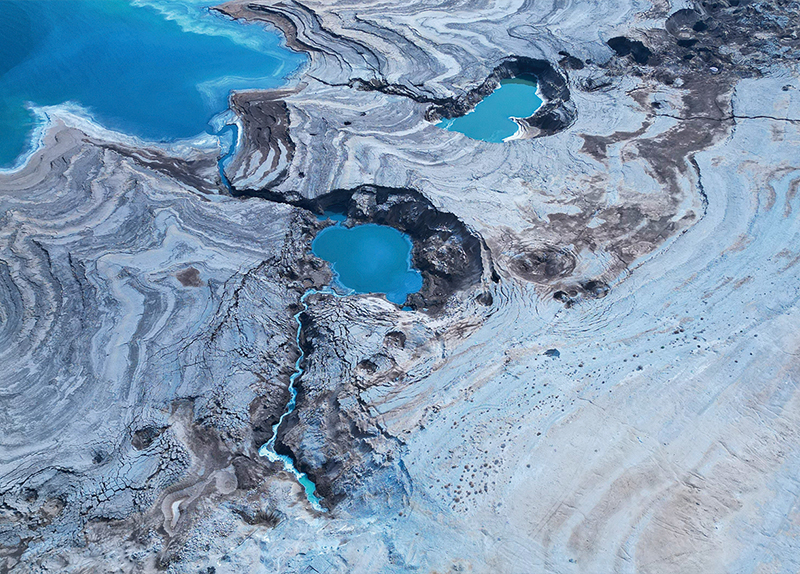 "The Dead Sea is a lake unlike any other, being both the lowest place on Earth at 439.78 meters below sea level and one of the world’s saltiest bodies of water. Its extreme salinity, nearly 10 times that of the ocean, also has the interesting effect of making sinking virtually impossible. But this extraordinary natural landmark, shared by Israel, Jordan, and the Palestinian territories, is quickly disappearing.
 One plan involves replenishing the lake with water from the Red Sea, but critics worry it may alter the Dead Sea’s unique chemistry. Another proposal calls for restoring the Jordan River by reducing water diversions and augmenting its water supply with treated wastewater, though severe regional water shortages make this difficult.




