South Korea Tightens Rules as E-Scooter Accidents Surge
South Korea is ramping up restrictions on electric kick scooters, also called e-scooters, as accidents involving these personal mobility (PM) devices keep increasing. In recent years, over 2,000 e-scooter accidents have been reported each year. In Seoul’s Seocho District, new signs now prohibit e-scooters near cram schools from noon to 11 p.m. to protect students and reduce danger in busy walking areas.
More fatal incidents involving e-scooters are happening nationwide. A middle school student recently died after colliding with a car, and another man died after falling off a curb while riding an e-scooter. Many of these accidents involve underage or unlicensed riders. From 2020 to 2024, over 40% of PM accidents involved drivers without a license ? many being teenagers.
Even though the law requires a license to ride, a recent investigation showed that six major e-scooter rental companies were not checking licenses properly. Experts say local rules are insufficient and that stronger national laws are needed.
Globally, countries like Germany and the Netherlands mandate insurance and license verification for e-scooters. Cities like Paris and Melbourne have even banned rental e-scooters altogether. Experts say South Korea should follow these steps to improve safety and accountability.
J.K. Park Staff Reporter junior/1750138802/1613367801
1. Where are e-scooters banned in Seocho?
2. Why are they banned near schools?
3. Are rental companies checking licenses?
4. What happened to a student on an e-scooter?
1. Would you like to ride an e-scooter?
2. Should kids ride e-scooters?
3. What makes riding safe?
4. How can we stop accidents?







































































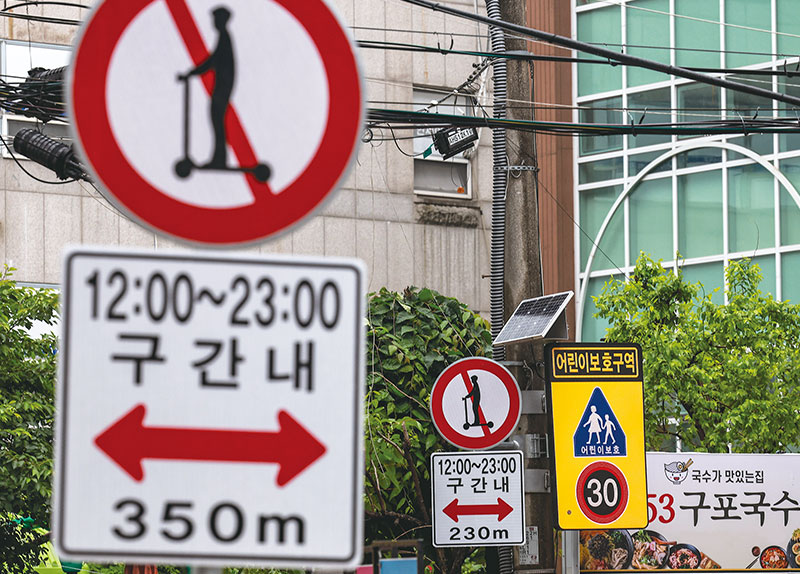 South Korea is ramping up restrictions on electric kick scooters, also called e-scooters, as accidents involving these personal mobility (PM) devices keep increasing. In recent years, over 2,000 e-scooter accidents have been reported each year. In Seoul’s Seocho District, new signs now prohibit e-scooters near cram schools from noon to 11 p.m. to protect students and reduce danger in busy walking areas.




